The program booklet is below. Several hundred people thrilled to the music of Dan Forrest at Elmira’s Clemens Center, a performance widely recognized as one of our best ever!
FROM OUR PRESIDENT
Welcome! And thank you for joining us for this performance of Dan Forrest’s Creation. All of the Cantata Singers, our orchestra, and the singers from the Chorus of the Southern Finger Lakes who have joined us today are eager to share this remarkable work with you. Earlier this month we had the pleasure of joining the CSFL and OSFL for a spirited performance of Haydn’s The Creation, and we are glad to continue that musical partnership here.
As with all of our concerts, today is about community—the musicians who have devoted so much time to preparing this work, the local talent that enriches our region (including the remarkable composer whose music we sing tonight), and you, the audience, whose presence is essential to the experience of live music. And it is all only possible with your ongoing support.
Part of the appeal of performances like this is the fundamentally human way the sound reaches you. With one small exception, everything you hear tonight comes to you without electronic mediation: bows drawn across strings, air shaped through brass and wood, drumheads struck, and the combination of many vocal cords working together to tell this creation story. Even the single electronic keyboard on stage is being treated as an acoustic partner, used only to provide a small, tailored palette of instrumental colors. In a world where we have recordings in our pocket of almost any music ever made, our concerts remain something different—music created entirely in real time by people in the same room as you.
This event is supported by the Tripp Foundation (who funded the educational presentations leading up to tonight’s performance), the New York State Council on the Arts, the Community Foundation, the Anderson Foundation, and by you, our loyal audience. This generosity plays a vital role in sustaining the arts in our region and allows us to continue to present our concerts free to the public, and we are deeply grateful.
Under the astute guidance of our music director, Will Wickham, we strive to bring you an engaging and varied program at every concert. We believe today’s presentation meets that goal, with the added excitement that in just three weeks we will perform this compelling work in the ancient Rochester Cathedral in the United Kingdom where Dan Forrest—who grew up in the nearby hamlet of Breesport and has since earned international recognition—is the composer-in-residence.
Thank you for all that you do,
Jeff DeMeritt
President, Cantata Singers of the Southern Finger Lakes
DIRECTOR’S NOTE
While making music is an intensely joyful activity, that joy is heightened greatly when the music is new, fresh, and filled with affirmations of the life of the people around us as well as the planet that supports us.
Even more joy comes from knowing something about the source of that music.
As a composer myself, I know firsthand how this glorious corner of the world, our precious southern Finger Lakes region informs my music. My connection with the music of Dan Forrest in general and this work in particular is deeper because I can hear and feel his connection with the beauty of this region in the music.
Having known Dan when he was growing up in nearby Breesport, and knowing his parents through shared community, I see his work not merely as the output of a world-class composer, but as a continuation of the values instilled in him here in the Chemung River valley. Listen carefully, and you will hear the joy of the school playgrounds of Dan’s youth. You will sense the small-town atmosphere we all find in our churches, workplaces, and community organizations. Even the careful teachings of our own Frances McLaren, Dan’s first piano teacher, are evident in the care he takes fitting music to every word; writing every note, every chord with the greatest of care. By weaving together high-art complexity with the groundedness of his Breesport roots, Dan reminds us that the creation he depicts isn't just a distant, ancient event—it is the very soil beneath our feet and the shared breath of the people standing beside us in the concert hall.
The final layer of joy for me and for the family of musicians on the Clemens Center stage today is the ability to share Dan’s musical gift as our gift to you. Our hope—the hope of well over a hundred performers—is that you too will feel the beauty, the grandeur, and the joy of life and nature in our corner of this amazing planet we all share. - - will wickham
The Cantata Singers are
Soprano - Ruth Bruning, Andi Dietrich*, Jessica Fierro, Robin Fitzgerald, Karen Geer, Joy McFarland,* Betty McKamey,* Susan Nagle, Connie O'Herron*, Joy Perry,* Betty Jo Rathbun, Desiree Rogers, Wendy Winnett,* Nan Woodworth
Alto - Lou Bleiler, Molly Cusick,* Sally Davis, Clare Ferenczy, Judy Hambruch,* Ruth Hauser, Laurie Kraska, Gail Lewis, Frances McLaren, Nancy Pangia, Jean Papandrea, Irene Peterson,* Mimi Petrillose, Nancy Ruda, Betsy Sentigar, Robin Stork,* Kathy Thorne,
Tenor - Melody Chilson, Mark Cox, Mary Ann Marks, Pat Peters,* Gary Tucker, Lydia Wickham, Barry Winters*
Bass - Bill Brodginski, Jim Cook, Jeff DeMeritt*, Stephen Nagle, Joe Ponzi, David Rosplock, Ron Tunison
*Also a member of the Chorus of the Southern Finger Lakes
Rehearsal pianist - Frances McLaren
Assistant Music Director - Mark Cox
Music Director - Will Wickham
The Chorus of the Southern Finger Lakes singers are
Soprano - Sunhwa Choi, Pat Defendorf, Mary Griffin, Valerie Heywood, Esther Karppala, Wendy Kawczenski, Jessica LaBrake
Alto - Carol Begeal, Pam Schmitt, Cari Stage, Karen Youngman
Tenor - Diane Edwards, Alan Reed, John Zollweg
Bass - Gary Brown, Matthew Burroughs, William Cowdery, Scott Frye, Jonathan Seamon, Cameron Spicknall
Conductor - William Cowdery
Also joining to sing this concert are:
Soprano Kai DonDero, Susan Hillier, Wendy Kawczenski, Annette Ungvarsky-Murray, Sherry Warner
Alto Amanda Clark, Kessey Kieselhorst, Kristen Merritt, Emily Peckham, Lisa Shanks, Katie Vrable, Nanette Wyak
Tenor Adam Loftus, Alan Reed, Jake Schultze
Bass Brad Buchanan, Mark Loftus, John Merrill, Joel Spinney, Phillip Spinney, Keith Thorne, Chris Vrable
Bell Choir Randy Cornell, Ruth Hauser, Paul Holland, Susan Hoskins, Annette Stevens, Pat Richards, Deb Stamp
Director - Paul Holland
Today’s orchestra includes
Flute - Jeanne Sperber, Melissa Moore
Oboe - Anita Pawlak, Jenna Cryderman
Duduk - Jenna Cryderman
Clarinet - Kenneth Borrmann, Spencer Blumenfeld
Bassoon - David Resig, Martha Weber
Horn Rebecca Dodson-Webster, Linda Bergstrom, Benjamin Levano-Futterman, Sarah Pulver
Trumpet - Larry Burroughs, Jud Spena
Trombone - Mike Carson, Sarahjane Harrigan
Bass Trombone - Craig Harrigan
Tuba - Noah Fricker
Percussion - Simon Bjarning, Bobby Frisk, Giancarlo Levano-Futterman
Keyboard - Grace Cox
Harp - Elizabeth Mayo
Violin 1 - Augusto Diemecke, Debrah Devine, Jessica Tae Anthony, Kathryn Drake, Reuben Foley, Tracey Ingerick
Violin 2 - Margaret Matthews, Abigail Spinney, Oliver Kriska, Erika Nick, Rachel Allen, Enaw Elonge
Viola - Max Buckholtz, Joanne Lowe, Ashley English, John Paul Tobin
Cello - Christine Lowe-Diemecke, Rebecca Spena, Stephanie Borrmann, Gilbert Antoine
Double Bass - August Bish, Nic Mathisen
The Chorus of the Southern Finger Lakes is a vibrant community of volunteer musicians dedicated to bringing powerful symhonic choral masterworks to life alongside the Orchestra of the Southern Finger Lakes. Directed by William Cowdery, the ensemble typically features more than 60 voices and performs regularly with Maestro Toshiyuki Shimada and the OSFL. From monumental works such as Handel’s Messiah and Mozart’s Requiem to more intimate repertoire, the Chorus brings passion, artistry, and a deep sense of community to every performance. For its members, singing with a full symphony orchestra is a powerful and life-affirming experience that inspires audiences and performers alike season after season.
Chorus Director William Cowdery, Ph.D., is a respected conductor and Cornell-trained musicologist specializing in the works of J.S. Bach. Currently Musical Director at First Congregational Church in Ithaca, he has served on numerous college faculties and led ensembles like Cornell’s Sage Chapel Choir. A frequent lecturer and festival performer, he has also contributed to major publications including the New Harvard Dictionary of Music.
Who’s Who!
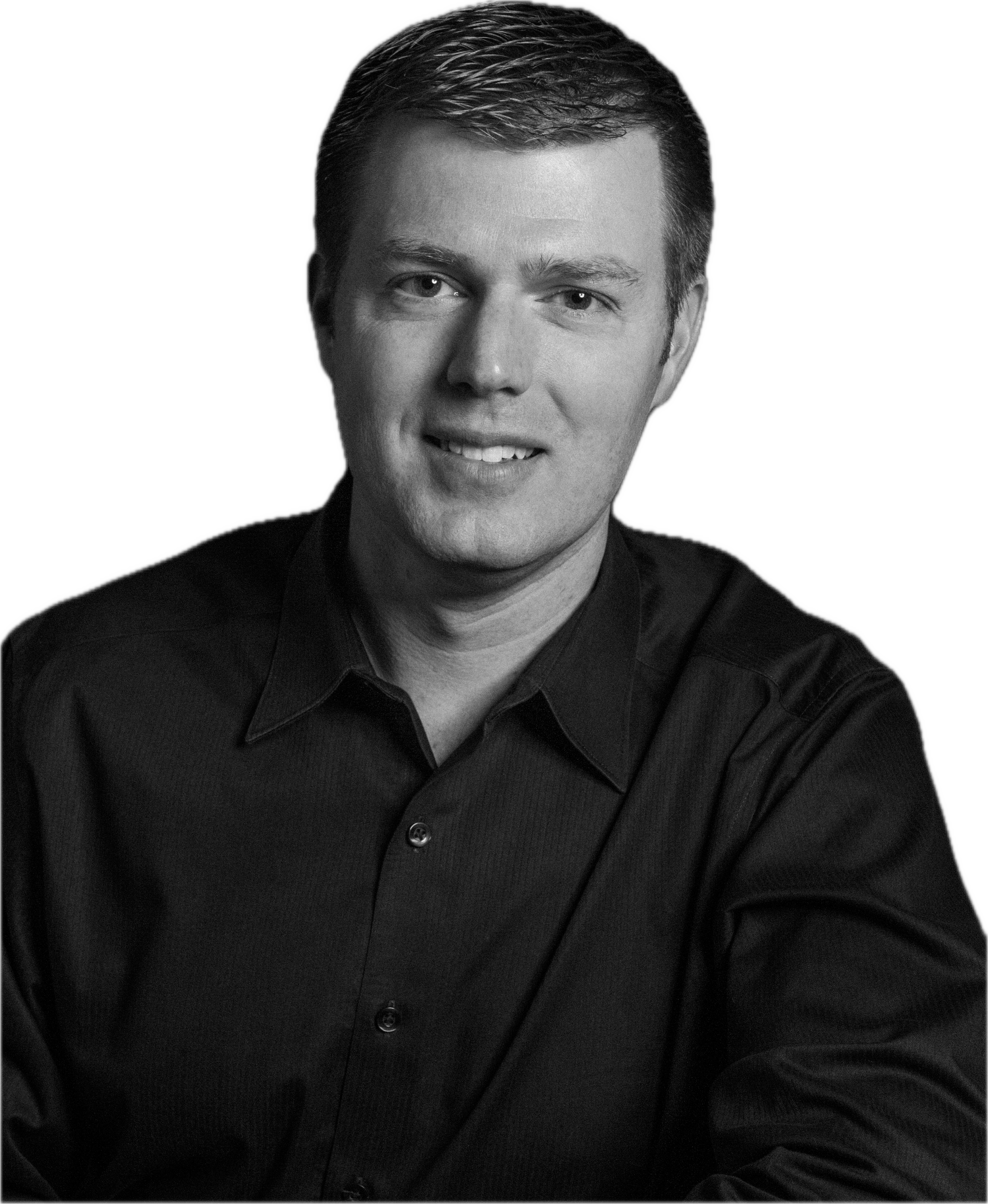
Composer Dan Forrest, who grew up in Breesport, is an internationally recognized composer known for his lyrical and expressive choral music. His works have been performed by leading ensembles worldwide. Forrest's style blends contemporary technique with accessible melody, exploring themes of beauty, nature, and the human spirit. His music frequently appears on "best-seller" lists. He holds degrees from Bob Jones University and the University of Kansas, where he earned his doctorate. Beyond composing, Forrest is active as a conductor, clinician, and speaker, sharing his passion for music and its power to connect. Dan’s first piano teacher was Frances McLaren, our rehearsal pianist. It is notable that the first piece of music Dan ever composed was premiered during one of Frances’s student recitals two and a half decades ago.
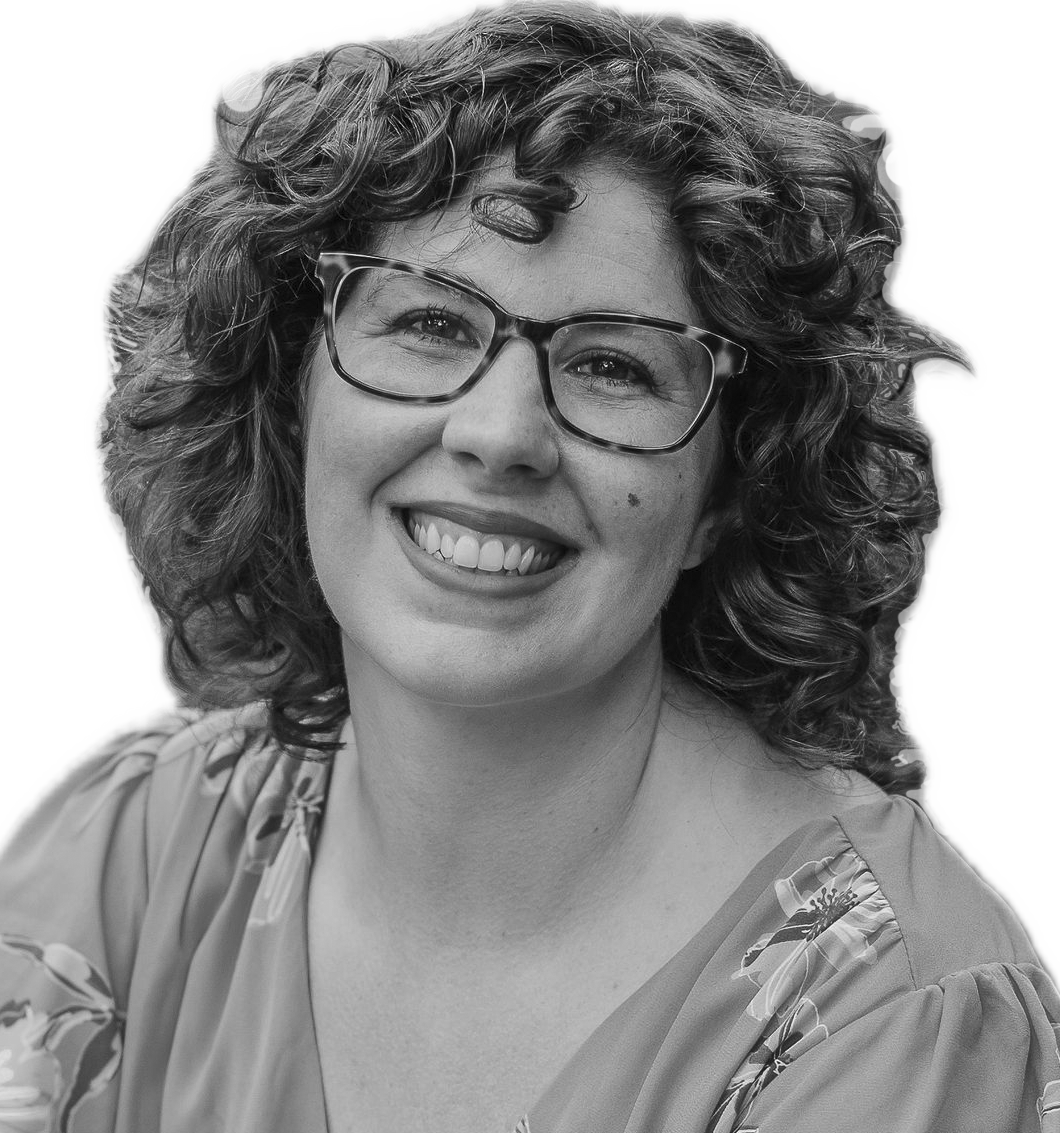
Ashley Alden is a lyric soprano with a background in classical and contemporary music. She holds degrees in Vocal Performance from The Catholic University of America, where she was honored with the Performance Award. She holds a Professional Studies Certificate from the Manhattan School of Music and completed additional training at CCM Institute at Shenandoah University.
Ms. Alden has performed with numerous choirs and ensembles. As a core member of The Mendelssohn Club of Philadelphia, she debuted the Pulitzer Prize-winning Anthracite Fields by Julia Wolfe. Notable chamber music performances include Mozart’s Laudate Dominum from Vesperae Solemnes de Dominica K.321, Schubert’s Mass in G, Bach’s Coffee Cantata, and Villa-Lobos’ Bachianas Brasileiras. Originally from Virginia, she relocated to Corning, where she runs a thriving private voice studio, Ms. Ashley Sings, and serves as the Minister of Music at Bethany Lutheran Church.

Originally from Elmira, baritone Todd Thomas is a Verdi specialist, lauded for his powerful voice and nuanced portrayals. Opera News called him "warm and centered," and his Iago earned standing ovations. He has sung Der fliegende Holländer in Shanghai, Rigoletto, and Scarpia in Tosca. He has also appeared frequently in concert, including at Carnegie Hall and most recently in Haydn’s The Creation in Elmira earlier this month. He can be heard on the Naxos recording of Amahl and the Night Visitors and his solo album, Crown Him Lord of All. Todd’s first music teacher was Marge MacPherson, the long-time #1 fan of the Cantata Singers whose life was featured in As Through Darkest Night, part of our recent Story Music Project.
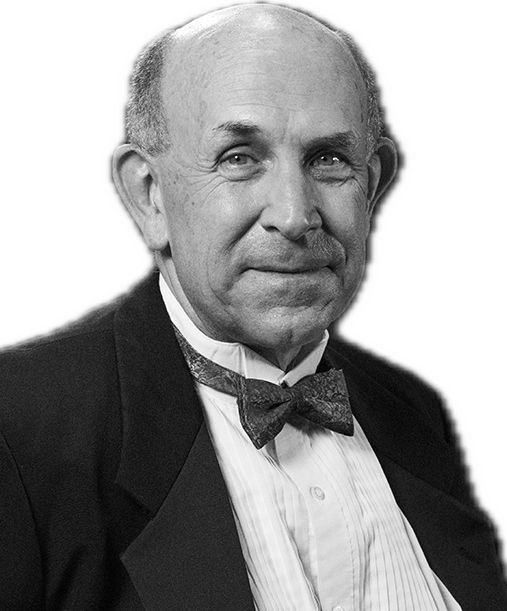
Will Wickham, music director of the Cantata Singers since 1996, teaches music at Corning Community College and has worked with many choral and theatrical organizations around the area. Will is also a composer who has frequently written for the Cantata Singers. He and the Cantata Singers were honored with a Creatives Rebuild New York Artist Employment Grant in 2022. Much of the music from that collaboration can be found on the web at youtube.com/@cantatasingers.
CREATION Dan Forrest (b. 1978)
Written for the 75th anniversary of the Wayne Oratorio Society (Philadelphia), Dan Forrest’s Creation honors the 225th anniversary of Haydn’s similarly titled masterpiece. This 72-minute work for chorus and orchestra is less a strict narrative, and more a celebration of the wonders and beauties of our world, using a variety of ancient texts as thematic commentary.
I. Introit
Veni, Creator Spiritus, Come, Creator Spirit
Mentes tuorum visita, Visit the souls of your devoted,
Imple superna gratia With your divine grace fill
Quae tu creasti pectora. The hearts which you have created.
(from Veni, Creator Spiritus, ancient liturgy)
Introit ushers the listener into a mysterious world before the dawn of time, as chants of Veni, Creator Spiritus arise and are mixed with the introduction of key musical themes for the entire work.
II. The Dance Before Time
Vox Domini, The voice of the Lord,
Dominus super aquas. Lord over the waters.
In principio Deus... In the beginning, God…
(from Psalm 29 and Genesis 1)
The Dance Before Time begins without pause, with the “spirit moving upon the face of the waters.” A mezzo-soprano solo begins the narrative, “in principio Deus,” amidst swirls of themes from this movement and the previous one, and creative energy builds, waiting to be unleashed.
III. The Lion Sings
…Creavit. …created.
Credo in unum Deum, I believe in one God,
Patrem omnipotentem, The Father almighty,
factorem coeli et terrae, maker of heaven and earth,
visibilium omnium of all things visible
et invisibilium. and invisible.
(from Genesis 1 and Credo, ancient liturgy)
The Lion Sings alludes to a well-known Lion in famous English children’s literature, who sang a world into existence. A well-read listener will hear every musical detail from that story happening, from the baritone soloist singing the Lion’s song, to the sun bursting into light, the unfurling of all green things, and eventually all animals coming to life in a raucous barn dance celebrating the joy of all creation.
We then encounter several tableaus representing the days of creation; each sets a Scriptural or liturgical text as commentary on the beauty of that part of creation, inspired by various experiences from the composer’s travels.
IV. Light
Ego sum lux mundi, I am the light of the world,
Ego sum lumen vitae. I am the light of life.
Qui sequitur me Who follows me
sed habebit lumen vitae. shall have the light of life.
(from John 8)
Refrain
Et vidit Deus And God saw the
[lucem/caelum/astra/ [light/sky/stars/
creaturas/opus], creatures/work],
quod opus esset bonum. that the work was good.
Tota pulchra, tota es, Wholly beautiful are you, entirely,
et macula non est in te. and there is no stain in you.
Alleluia. Alleluia.
(from Genesis 1 and Tota Pulchra Es, ancient liturgy/Song of Solomon 4)
Light, inspired by countless sunrises, sets "I am the light of the world; who follows me shall have the light of life" as an exuberant dance in asymmetrical meter. The initial melody from the Introit then returns as a coda with new text combining “…and God saw that it was good" from Genesis with words from the Song of Solomon – a love song to an unspoiled creation: “wholly beautiful are you, entirely, and there is no stain in you.” This refrain is then heard after each day of creation, transformed into that movement’s unique musical style.
V. Sky
Quoniam videbo When I behold
caelos tuos… your heavens…
Caeli enarrant the heavens are telling
gloriam Dei. the glory of God.
Opus manus eius The firmament declares
adnuntiat firmamentum. the work of his hands.
(from Psalms 8 and 19)
Refrain (see IV. Light)
Sky is inspired by the expanse of the open sky. As the first tribute to Haydn, melodic themes from his The Heavens Are Telling are interwoven (in slow motion) with modern harmonization and new material throughout this movement.
VI. The Garden
Vinea mea electa, My chosen vineyard,
ego te plantavi. I planted you.
Locus iste a Deo factus est, This place was made by God,
inaestimabile sacramentum; a priceless holy place;
irreprehensibilis est. it is without fault.
(from Vinea me electa and Locus Iste, ancient liturgies)
Refrain (see IV. Light Refrain)
The Garden is an expression of the composer’s love of various gardens in the world, from New York (Central Park) to Singapore (Botanical Gardens) to his own #forrestgardens. This setting reimagines the meaning of sacred texts to express the priceless beauty of green spaces; the Locus Iste here refers not to a cathedral, but to the sacred sanctuary of a garden. The music slowly twines around itself, almost like time-lapse photography of plants unfolding shoots and leaves.
VII. Music of the Spheres
Pleni sunt caeli et terra Heaven and earth are full
gloria tua. of thy glory.
Hosanna in excelsis. Hosanna in the highest.
(from Sanctus, ancient liturgy)
Refrain (see IV. Light)
Music of the Spheres invokes the concept of "musica universalis"- the "music of the heavens" that the ancients believed was created by the orderly and proportional motion of the stars and planets in space, as well as "vox caelestis" - the "voice of the heavens" that speaks in the night sky. The Sanctus text is set here as a four-part mensuration canon, where each melodic subject entrance is twice as slow as the previous one; eventually we hear the same melodic line at four different speeds simultaneously, picturing the clock-like precision of the stars and planets moving through space.
VIII. Wings
Oh that I had wings like a dove
- wings of the morning -
then I would fly.
(from Psalms 55, 139)
Wings represents the "flying creatures" portion of day five, with text from the Psalms. The music begins delicately, like a newly hatched butterfly first unfolding its wings and fanning them, then gradually builds to the moment where it bursts into flight and is carried on the wind until it disappears from sight. The main melodic ostinato in the accompaniment of this movement is an example of augenmusik - music for the eyes- where the musical page looks like the ideas being described: its instrumental melodic contour outlines the line-drawn shape of a bird in flight.
IX. Deep Blue
Vidi aquam egredientem, I saw water flowing,
et omnes ad quos and all to whom
pervenit aqua ista this water came
salvi facti sunt, were saved,
et dicent, alleluia! and shall say Alleluia!
(from Vidi Aquam, ancient liturgy)
Refrain (see IV. Light)
Deep Blue then turns to the "deep sea" portion of day five, with liturgical text "I saw water flowing...". The mysteries of the deep are invoked with low thick textures and constantly flowing water and waves. Eventually, "Alleluias" arise from the depths, like a whale breaching the surface of the ocean.
X. Ish Ishah
Digitus Dei dexterae, Finger of God's right hand,
Tu rite You are the one
promissum Patris. duly promised by the Father.
Accende lumen Enkindle your light
sensibus, in our minds,
Infunde amorem cordibus. Infuse love in our hearts.
(from Veni, Creator Spiritus, ancient liturgy)
Ish Ishah was inspired by Michelangelo's famous painting The Creation of Adam. Its finger of God reaching to humanity was quite possibly inspired by the Veni Creator Spiritus text (heard earlier in this work), in the stanza sung here: "Finger of God's right hand...kindle your light in our minds, infuse love in our hearts." Many believe that the primary character visible on God's arm in the painting is Eve; her face as she strains for a look at Adam reflects the first stirring of human love, with all its wonder and complexity - the moment God "infuses love into our hearts.” The Hebrew words Ish Ishah are taken from the Genesis narrative, representing man and woman, and this setting presents humanity as the pinnacle of all creation, not merely in their intellect or the beauty of their form, but in their capacity to love.
XI. Do It Again
If something goes on endlessly repeating itself,
it might feel like mere clockwork.
We might feel that if the universe was personal, it would vary –
that if the sun were alive, it would dance.
But perhaps…the sun rises every morning
because he never gets tired of rising.
His routine might be due not to lifelessness, but to a rush of life.
Children, with their endless energy,
always want things repeated and unchanged…
they always say, “Do it again.”
What if God has this eternal vitality,
and is strong enough to exult in repetition?
Perhaps God says every morning, “Do it again” to the sun;
and every evening, “Do it again” to the moon,
…but has never gotten tired of it.
It may not be necessity that makes all daisies alike;
perhaps God makes every daisy, one at a time,
because he has never grown tired of making them.
This grand show is eternal.
It is always sunrise somewhere;
a shower is forever falling; vapor is ever rising.
Eternal sunrise, eternal sunset,
eternal dawn and gloaming,
on sea and continents and islands,
each in its turn, as this round earth rolls.
-Adapted from G.K. Chesterton and John Muir (used by permission)
Do It Again is a musical underscore for narration from two of the composer’s favorite passages of writing about this earth: one from English philosopher G.K. Chesterton and one from environmental advocate John Muir. The music reprises a theme introduced in the Introit but not heard again until now (thus musically picturing the sense of “do it again”).
XII. Boundless
Laudate, luces, Praise him, lights,
Laudate, caela, Praise him, skies,
Laudate, horti et ast’res! Praise him, gardens and stars!
Laudate, creaturae, Praise him, creatures,
Laudate, filii! Praise him, children!
Refrain
Boundless unleashes a torrent of musical themes, all piling on top of each other, in a finale celebrating the diversity yet wholeness of all creation. The title refers both to the limitless joy found within the movement as well as the seemingly limitless number of themes (from within this work and beyond) which all tumble together. Amidst all this celebration, a fugue breaks out. Marked "Homage to FJH,” it uses thematic material from this work's Credo within the formal and harmonic structure of Haydn's beloved Awake the Harp. Eventually all possible themes and subjects are recapitulated in a celebration whose joy can only be described as boundless.
Program notes by Dan Forrest
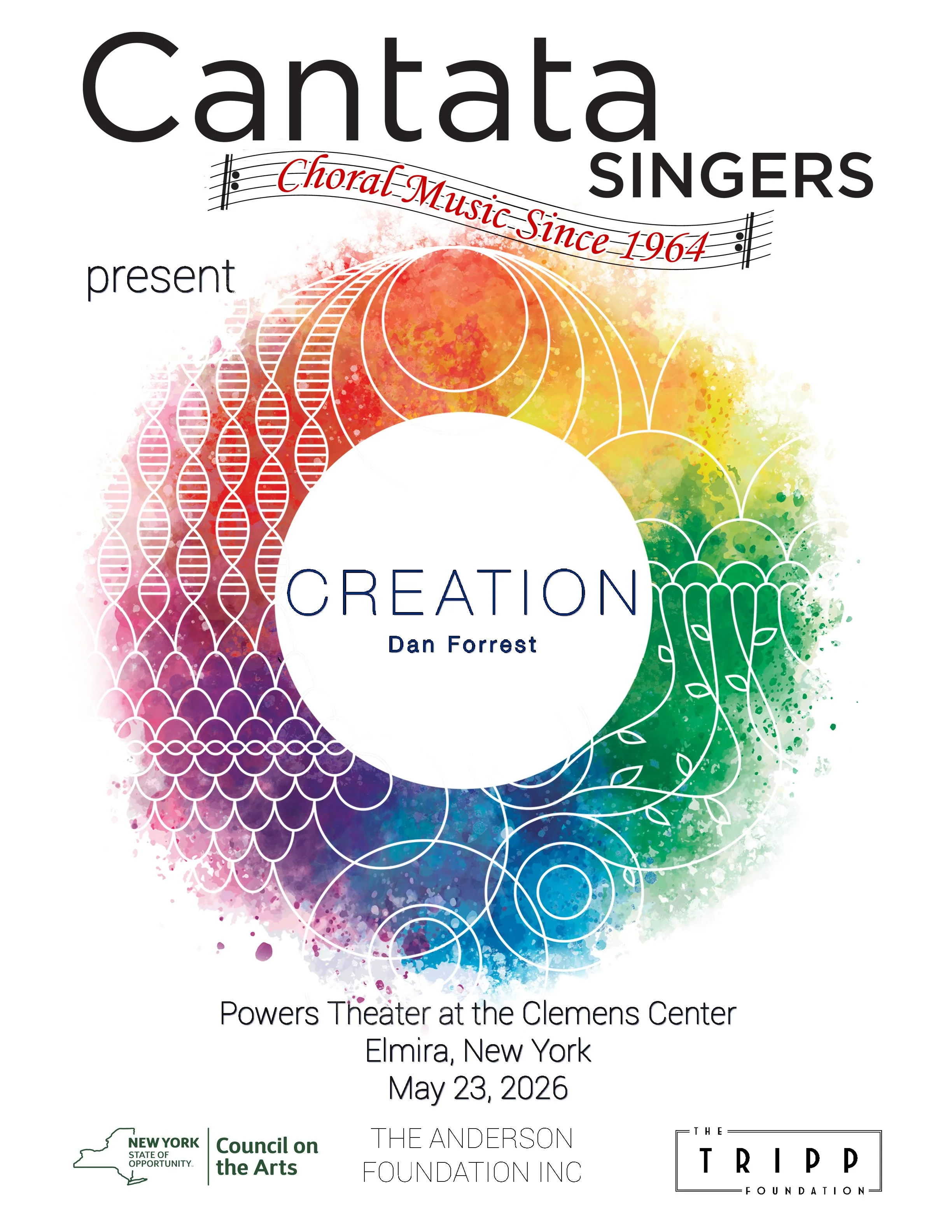
About the cover artwork: the circle shape and the complete color spectrum represent the diversity yet wholeness and interconnectedness of all creation. The line drawings represent (clockwise) the themes of creation as presented in the work: Light, Sky, Garden, Spheres, Wings and Deep Blue (note that these lines both have double meanings: waves of the ocean and fish scales, and interlocking bird shapes that also evoke clouds/sky), and lastly, Ish Ishah (humanity) represented by double helixes. All these lines flow together in one interdependent whole, as does creation. - - Dan Forrest
Special thanks to our 2025-2026 Donors
Sponsors - Gregg Learned, Kaye Newbury, The Alfred & Jane Ross Foundation
Benefactors - $250 plus - Lou Bleiler, Ruth Bruning, Anthony Ciccariello, Bob & Barb Chapman, James & Tracey Cook Diane Edwards, Robin Fitzgerald, Mark & Kathy Lovell, Joy Perry, Richard Perry
Patrons - $100 - $249 - Tedd & Carol Arnold, Susan Bjerke, Lynda Brand, Bill Brodginski, James Burke, Judy Butterfield Jean Campbell, Nancy Campbell, H. John Cumming, Jeff DeMeritt, Katie Daire, Lynn Decher—in memory of Martha Horton, Tom & Vera Dykes, John Fannin, Albert & Maryilyn Heidi Gerth, Eleanor Haber, Judy Hambruch, Sherry & Jack Hoare, Sara K. Hurley, Hank Jonas, Mary Ann & Ted Marks, Elizabeth McKamey, Frances McLaren, Susan & Stephen Nagle, Irene Peterson, Margaret Petrillose, Martha Pierce, Joe & Melody Ponzi, Fran Palumbo, Christina Roosa, Nancy Ruda, Mark & Leslie Sand—in memory of Lou Sand, Melissa Schroeder, Tricia Schucker & Lindsey Wickham, Annette Stevens, Betsy Sentigar, Ron Tunison, Lindsay Viana, Anne Welliver-Hartsing, Fred & Lynn Wickham, Lydia Wickham Chris & Brittany-Beck Wickham, Barry & Jane Winters, Mary Wynings
Sponsors - $50-$99 - Gary & Bonnie Chollet, Jim Cook, Marie Crossley, Molly Cusick, Helen Czajkowski, Sally & Doug Davis, Patricia Farwell, John Humphries, William Hungerford, Dennis Kingsley, Keith Kraska, Daniel LaBar, Eileen Leslie Gail Lewis, Kelly Lewis, Jan Liberatore, Margaret Lowman, Joy McFarland, Mila Meier, Jack Merrill, Mount Savior Monastery, Connie O’Herron, Shari Paige & Richard Rich, David & Kim Panosian, Jean Papandrea, Marianna Raho, David Rosplock, Rev. Betsy Sentigar, Judith Edson Sheasley, Kathleen Shimeta & Dan Holland, Patricia Stowell, Kristen Sutherland, Faith & Mike Tarby, Ann Thorner, Karen Updegraff, Meg Wickham, Wendy Winnett, Nan Woodworth
Donors - $25 - $49 - David Brockway, Melody Chilson Jamie Cooney, Nancy Cooper, Elizabeth Cowles, Saundra Curry, Edward Dougherty, James & Alicia Hare, Kim Hoare, Laurie Kraska, Laura Marley, Suzanne Mettler—in memory of Harry Hillman, Robert Palumbo, Pat Peters Joyce Rumsey, Marc & Lisa Rustici, Patricia Stadelmaier Marilyn Sullivan, B.C. Talbot, Cynthia Terry, Nancy Pangia Eric Vavrasek, Jane Winters, Kim Wolf
Other - Jan Aiello, Barbara Allen, Bruce Berman, Judy Born, Amy Chervinsky, Karen Dusek, Jessica Fierro Elizabeth Gawinski, Robert Gilman, Margaret Matthews Rachel Morgan, Susan Pawlak, Bonnie Root, Kim Quinn, Karen Rochester, Andrew Tunison, Cali & Cera Waite Amanda Warren, Jaqueline Winston
Cantata Singers programs are made possible by the New York State Council on the Arts with the support of the Office of the Governor and the New York State Legislature. Additional funding provided by The Community Foundation of Elmira - Corning and the Finger Lakes, The Tripp Foundation, The Anderson Foundation, and by our audiences and community partners.
Since 1964, The Cantata Singers have brought high-quality choral music to the Southern Finger Lakes. Founded to perform large-scale works, our chorus includes community members from all walks of life—from scientists and artists to educators and inventors. While some members are trained, most join simply with a voice and a passion for singing.
Join Us:
We welcome new singers during the first few weeks of each concert cycle. There are no auditions required—just a love of music, a strong work ethic, and a sense of humor!
www.cantatasingers.com for more information
For invaluable help making this program possible the Cantata Singers offers special thanks to: St. Matthew’s Episcopal Church of Horseheads, Corning Community College, Gary Chollet and the Orchestra of the Southern Finger Lakes, Simon Bjarning, Joel Smales, Tony Papandrea, Doug Davis, Amanda Clark, Jessica Gardner and the entire staff of the Clemens Center and many others without whom we could not do what we do!